
Rethinking the way we live
Inside Whispering Smith’s Joondanna Micro-Community
There’s a shift happening in the way we think about housing. One that is moving away from excess and toward intentional sustainability and connection to our surroundings and eachother.
At the forefront of this shift is Kate Fitzgerald of Whispering Smith, a female-led architecture practice based in Walyalup-Fremantle. Driven by strong social and environmental principles, her work challenges conventional ideas of space, scale + how we live, both now and into the future.
Recently, I had the opportunity to visit and photograph her latest project: Joondanna Micro-Community.
A New Model for Living
Set on a subdivided 1945 property in Joondanna, the project reimagines what suburban living can look like. Rather than a single dwelling, the site now holds a thoughtfully designed micro-community featuring the original home, alongside two newly built residences.
It’s a response to something much bigger than design. The housing crisis. To changing family structures and to the need for more flexible, multi-generational ways of living.
Designed with blended families, multiple couples, multi-generational families and shared living in mind, the project embraces medium-density housing – something Kate is deeply passionate about advocating for. Her tireless work with councils to gain approval for these kinds of developments is ongoing, and this project stands as a compelling proof of concept.
Working With What Already Exists
A defining thread throughout Kate’s work is honouring the past, with a deep respect for what already exists. (Showcased beautifully in her previous project Guiseppe’s House in Fremantle)
Rather than stripping a home back and starting again, she responds to what’s already there. Mid-century homes are reimagined with care, with their original charm retained and elevated for modern living.
Orientation, airflow and natural light are prioritised from the outset, and
spaces are designed to breathe, reducing reliance on artificial heating and cooling. It’s architecture that feels intuitive and considered for modern living.
Smaller, But Smarter
The residence I photographed (Unit A ) sits at just 147m². Less than half the size of the average new build in Perth.
And yet, it doesn’t feel small at all.
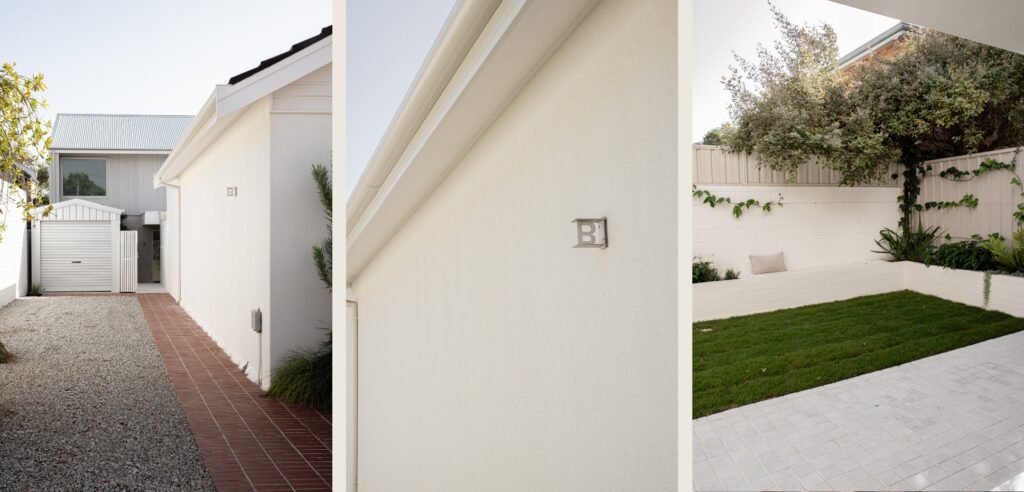
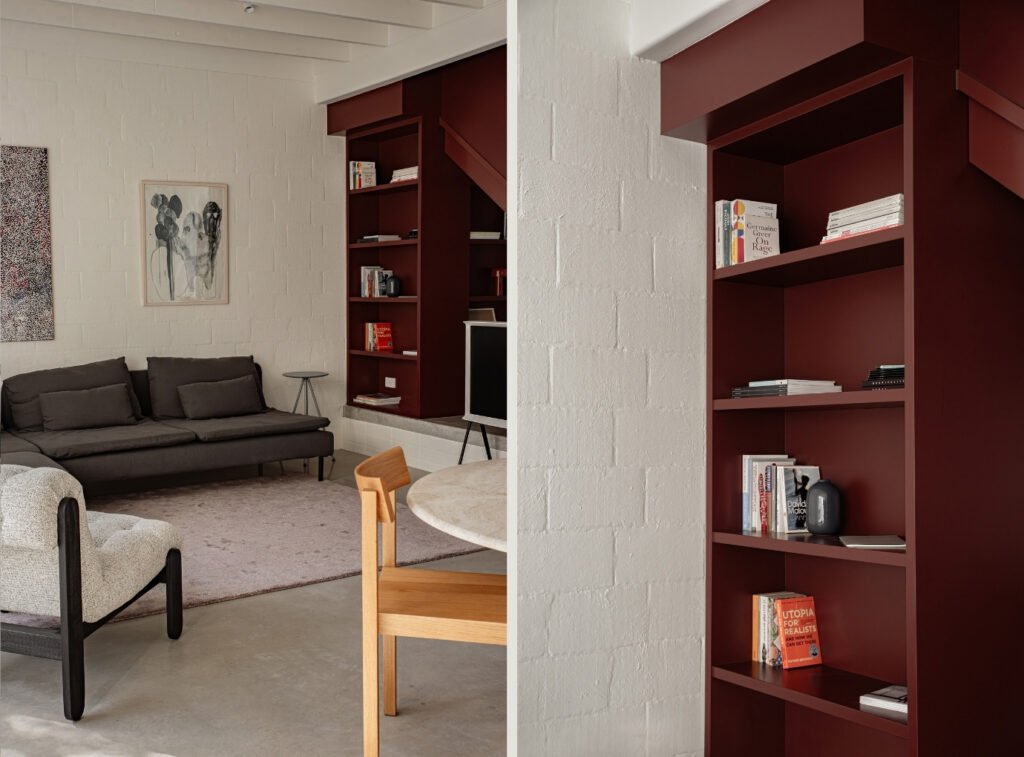
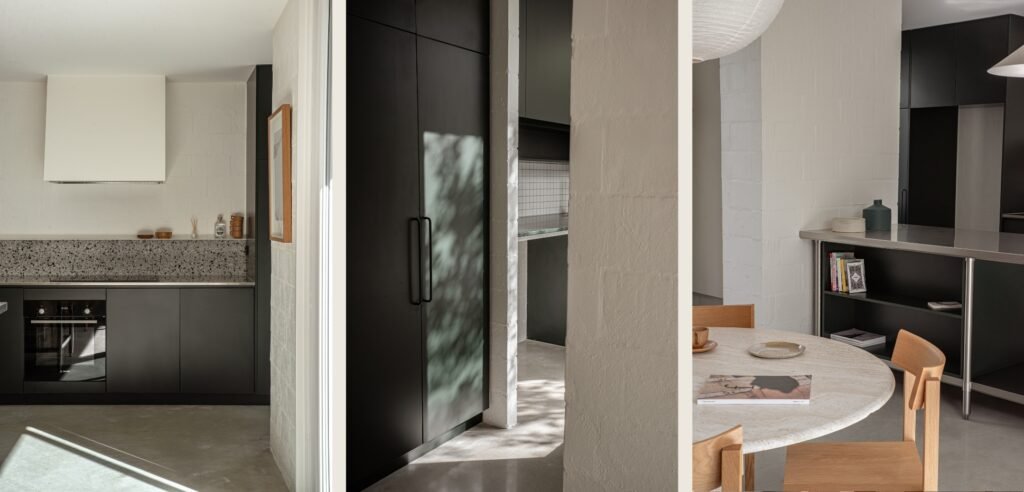
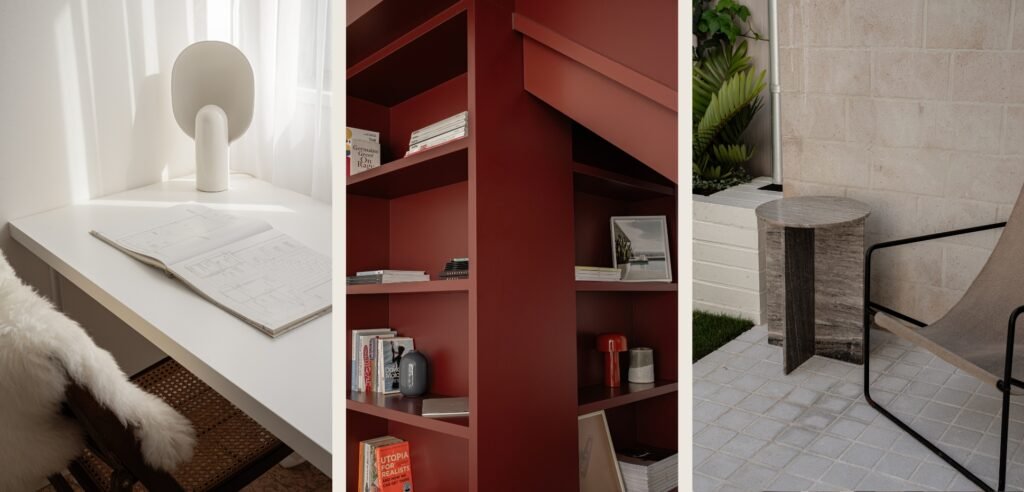
The space is open, airy and feels calm and expansive. There’s a seamless connection between indoors and outdoors, softened by natural materials and a restrained, tonal palette. (purposefully chosen for it’s flexibility for buyers) Concrete flooring grounds the home, absorbing and releasing warmth, while bouncing light throughout the space. Cork flooring in the bedrooms add another layer of intention; chosen not only for sustainability, but for their ability to absorb sound and soften the overall experience of the home.
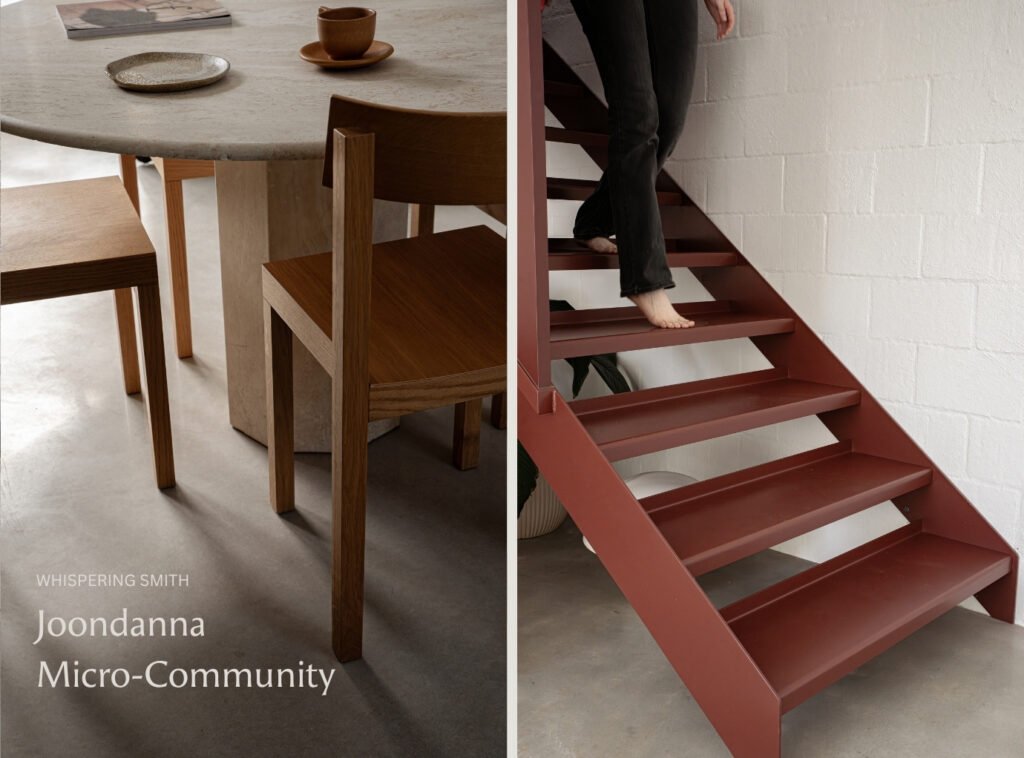
Timber is used sparingly and thoughtfully, acknowledging the protection of native materials like jarrah, and reserving wood for smaller, meaningful elements like furniture and photoframes.
Then, a moment of contrast – a bold manner red staircase, a subtle nod to a previous project (Giuseppe’s House), bringing warmth and personality into the otherwise calm, neutral space.
Designing With the Future in Mind
Sustainability here isn’t just a feature, but embedded in every decision. Recycled concrete pathways allow water to return to the natural water table, as well as an impressive 33% tree canopy coverage (well above Perth’s average of 15%), the project demonstrates what’s possible when environmental responsibility is prioritised from the ground up.
The intention to create homes that support people – not just now, but across generations to come.
Why Joondanna?
The choice of location has been equally considered. Joondanna offers a unique balance of character homes, proximity to both the city and the coast, and a more accessible entry price point compared to neighbouring suburbs.
It’s the kind of place where community can really exist, not just as an idea, but as a lived experience. (and a city council on board with sustainable living for the future)
A Shift Worth Paying Attention To
I left the property feeling inspired. Projects like this challenge the narrative of “bigger is better.” They ask us to reconsider how much space we truly need, and what we really value within it.
They open the door to new ways of living, being more connected, more sustainable + more intentional. And perhaps most importantly, they show that thoughtful design has the power to influence not just how we live, but how we move forward + enjoy spaces in the future.
Fallon
Follow more of Kate’s work over at Whispering Smith / New Resident
With thanks to DesignFreo.